



- Voice
- Keyboard
- String
- Woodwind
- Brass
N°9 Le Coucou au fond des bois
1886
Clarinet Bb (chalumeau) and piano
Arranged by Frédéric CELLIER
Duration ≃ 02:10 | Difficulty ≃ 1/10
$ 3.99 Add
Add
SCORE Clarinet Bb (chalumeau) and piano
PDF - 3 pages
+
PART Clarinet Bb (chalumeau)
PDF - 1 page
+
BACKING TRACK
MP3 - 1 track
More often heard than seen, the cuckoo is a harbinger of spring, as its song resounds in the forests at the start of this beautiful season.
Characterized by a simple two-note motif, this song nonetheless has a rich musical history:
As early as the Renaissance, Clément Janequin (1485-1558) published Le Chant des Oyseaulx (1537), in which the voices imitate the song of the cuckoo.
In the Baroque era, Louis-Claude Daquin (1694-1772) composed his Premier Livre de Pièces de Clavecin (1735), the third suite of which opens with his famous imitative rondeau simply called Le Coucou.
Ludwig van Beethoven (1770-1827) uses the 2 notes of the cuckoo in his Symphony N°6 Op. 68 called Pastoral (1808), as well as in his Piano Sonata N°25 Op. 79 called The Cuckoo (1809).
In his famous Carnaval des Animaux (1886) [The Carnival of the Animals], Camille Saint-Saëns (1835-1921) does not hesitate to have the two notes of the cuckoo repeated 21 times in N°9 Le Coucou au fond des Bois [The Cuckoo in the Deep Woods].
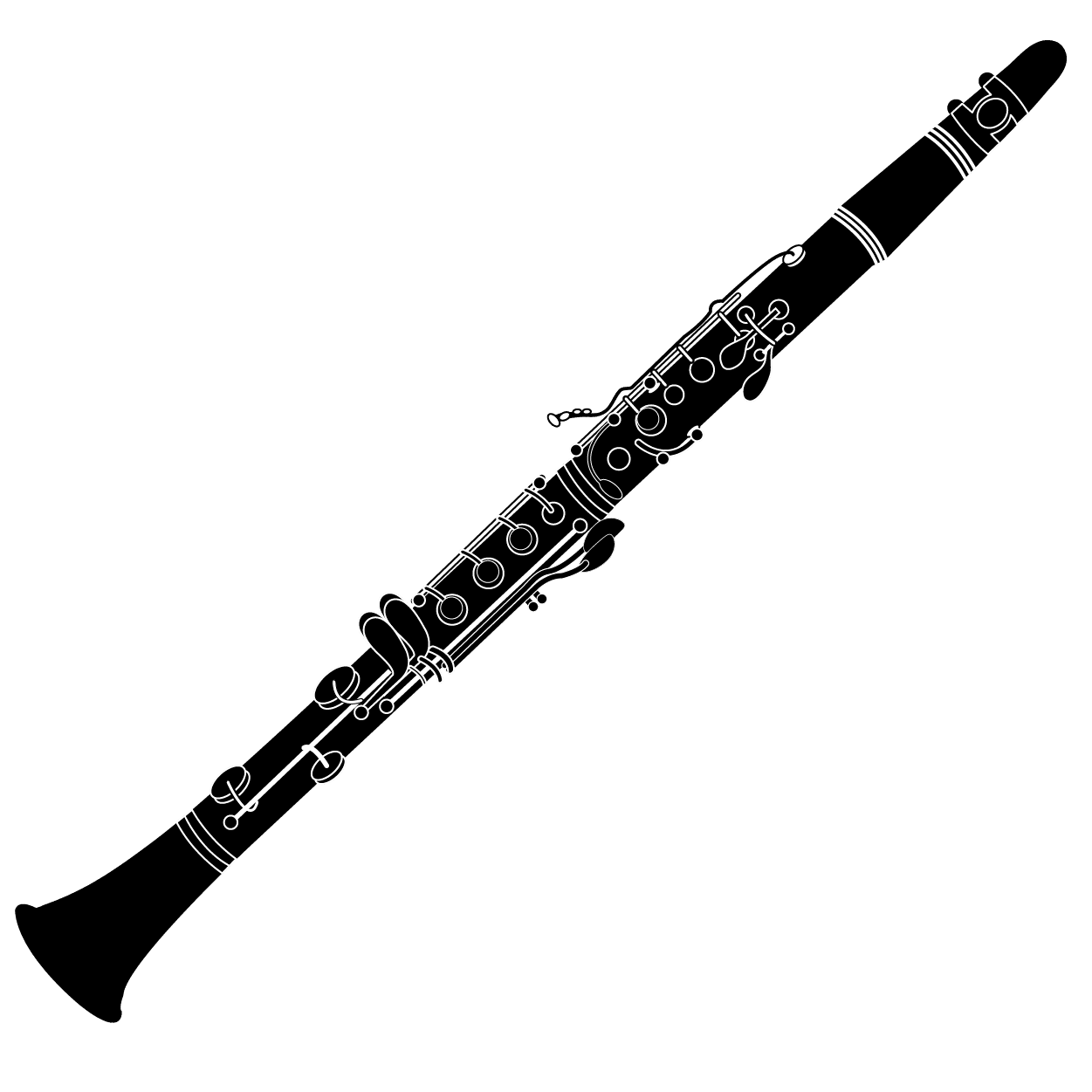
Like quiet footsteps on a mossy path, the slow, gentle chords of the piano (two pianos in the original version) wander through the deep forest in search of the cuckoo. The cuckoo, invisible, perched high in the treetops (the clarinet remains offstage, as indicated by the composer), and seemingly unaware of the walker's quest, continues imperturbably and irregularly to sing its ostinato of two sad, strange notes.
A magical balance between poetic sound and dry humor that sums up the extraordinary artistic success of Le Carnaval des Animaux.
Frédéric Cellier
Camille Saint-Saëns was born on October 9, 1835, in Paris, into a cultured family who recognized his musical talent at an early age. From childhood, he distinguished himself through his exceptional precocity at the piano and his aptitude for composition. Trained at the Paris Conservatory, he quickly mastered counterpoint, harmony, and classical forms, while developing a curiosity for instrumental innovations and foreign influences, notably those of Beethoven, Mendelssohn, and Liszt.
Saint-Saëns had a multifaceted career as a composer, virtuoso pianist, organist, and conductor. His work covers all genres: symphonies, concertos, operas, chamber music, piano pieces, and choral works. He is distinguished by a perfect balance between formal rigor and expressiveness, combining classical clarity, melodic elegance, and inventive orchestral colors. Works such as “La Symphonie avec orgue,” “Le Carnaval des animaux,” “Samson et Dalila,” and his Piano Concerto No. 2 illustrate this ability to combine virtuosity and imagination while maintaining a refined stylistic unity.
As a performer and teacher, Saint-Saëns contributed to the dissemination and evolution of French music. His interest in rare instruments and technical innovations greatly enriched the repertoire and inspired many composers, such as Fauré and Ravel.
Saint-Saëns died on December 16, 1921, in Algiers, leaving behind a prolific and varied body of work. Today, he is recognized as one of the great masters of French music, a composer who successfully reconciled classical tradition and modernity, rigor and imagination.
Along his university studies (DEA in musicology, University of Paris IV-Sorbonne), Frédéric Cellier was awarded three first prizes and a development prize at the CNR of Nice and won first prize at the International Competition of Musical Execution - soloist category – of Stresa (Italy).
He is the laureate of the Fondation de France and the Yehudi Menuhin Foundation and accredited teacher at the CNR of Nice, the CNR of Marseille, and at the CRR Olivier Messiaen of Avignon (France).
Frédéric Cellier is the interpreter of Francis Poulenc’s Sonata for clarinet Bb and piano with Jean-Michel Damase, Jean Françaix or Gabriel Tacchino, as well as his own arrangements for clarinet and harp of Erik Satie's Gymnopédies and Gnossiennes with the great French harpist Elizabeth Fontan-Binoche, and for clarinet, piano, and string orchestra of George Gershwin's Rhapsody in blue for Wynton Marsalis or under the baton of Adrian Gershwin, grandson of the composer.
Founder and artistic director of STRADIVARIUS Editions, he is the author of light music pieces played around the world and a considerable number of arrangements of all styles and for all instruments, acclaimed by many personalities in the music world, including Michèle Auric, Jean Françaix, Adrian Gershwin, Wynton Marsalis, Yehudi Menuhin, Madeleine Milhaud, Manuel Rosenthal, Gabriel Tacchino, and Ornella Volta.
"Frédéric Cellier has produced a number of adaptations of Georges Auric's works with such talent and precision that I consider them a natural addition to his chamber music catalogue."
Michèle AURIC - Georges Auric's widow
"To Frédéric Cellier, excellent musician and tireless arranger."
Jean FRANÇAIX - Composer and pianist
"Arranging a musical work is always a delicate and risky exercise, because it requires both modifying it so that it can be played by the desired instruments and preserving its very essence. But that is exactly what Frédéric Cellier has done, preserving the nuances, subtleties and soul of the original works while breathing new life into them.
His arrangements give all the musicians the chance to perform these compositions specially revisited for their instrument, and make music lovers rediscover them in a new light."
Adrian GERSHWIN - George Gershwin’s grandson
"Congratulations for your beautiful new orchestration and rendition of Gershwin’s Rhapsody in blue."
Wynton MARSALIS - Trumpet player, composer, bandleader, general and artistic director of Jazz at Lincoln Center, New York
"It is outstanding that Frédéric Cellier has managed to transpose Saxophone Marmalade from the saxophone to the clarinet. I thank him for it and wish its great and deserved success. "
Manuel ROSENTHAL - Conductor, composer and Maurice Ravel’s pupil
"I am very happy to tell you how much I appreciated your transcription of the Capriccio, based on Francis Poulenc's Le Bal Masqué. It perfectly reflects the spirit and verve of the score for two pianos that I had the opportunity to play and record with Jacques Février, and it was a great pleasure for me to premiere it in Montpellier."
Gabriel TACCHINO - Pianist, Francis Poulenc’s specialist
"I must tell you that I really like your transcriptions and that I think the tone of the instruments you have chosen suits perfectly our beloved composer."
Ornella VOLTA - Musicologist, president of the Erik Satie’s Foundation






Added to your basket
Removed from your basket
Added to your favorites
Removed from your favorites
You must be registered to use this function
You reached the download limit for free products (5 per day)



















 - SCORE Clarinet Bb (chalumeau) and piano)