



- Voice
- Keyboard
- String
- Woodwind
- Brass
 $ 3.99


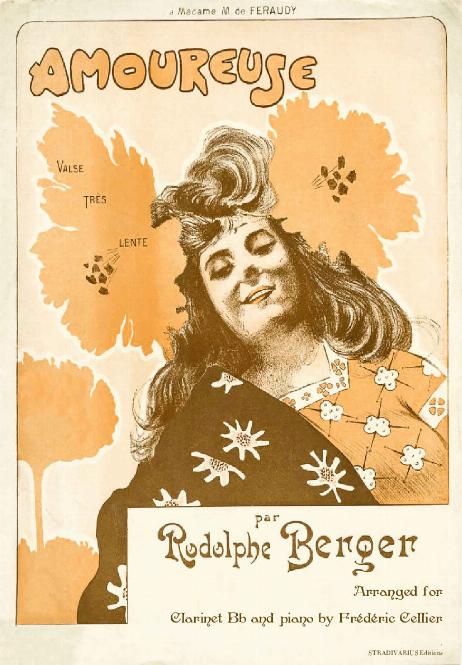
 - SCORE Clarinet Bb and piano)



1879
Clarinet Bb and piano
Arranged by Frédéric CELLIER
Duration ≃ 03:30 | Difficulty ≃ 7/10
$ 3.99 Add
Add
SCORE Clarinet Bb and piano
PDF - 7 pages
+
PART Clarinet Bb
PDF - 3 pages
+
BACKING TRACK
MP3 - 1 track
Gabriel Fauré was born on May 12, 1845, in Pamiers, in the south of France, into a modest family that was deeply committed to education and music. From an early age, he showed exceptional talent for the piano and organ, as well as a keen sensitivity for composition. Sent to the Petit Séminaire de Sorèze, he received a rigorous education that combined intellectual discipline with immersion in religious music, which had a lasting impact on his approach to harmony, counterpoint, and vocal writing.
Fauré moved to Paris, the heart of French musical life, and studied at the Conservatoire, where he quickly became a respected composer and teacher. His music is distinguished by its harmonic finesse, natural melodic sense, and elegance of form, placing him at the pinnacle of the late Romantic tradition while heralding new paths toward musical impressionism. His works, whether for piano, orchestra, or voice, reflect a rare subtlety and interiority: he favored nuance and intimate expression over spectacular effect.
Among his major contributions are his melodies, which reveal his unique ability to combine text and music, transforming poetry into a deeply personal sound experience. His piano works, such as the Nocturnes, Barcarolles, and Preludes, combine virtuosity and understated elegance, offering a rich but always controlled harmonic palette. His Requiem, with its moving sobriety, illustrates his ability to combine emotion and classical structure, testifying to his spiritual and musical depth.
Fauré also exerted a major influence as director of the Paris Conservatory, where he modernized teaching and encouraged the emergence of new talent. His life, although marked by progressive deafness in his later years, was entirely dedicated to music, which he approached with a keen sense of high standards and beauty.
Gabriel Fauré died on November 4, 1924, in Paris, leaving behind an immense legacy. Today, he is considered one of the pillars of French music, a composer who was able to reconcile classical rigor with modern sensibility. His work constitutes a veritable musical literature, where clarity, elegance, and subtle emotion come together, making him a master of musical intimacy and refined expression.
Along his university studies (DEA in musicology, University of Paris IV-Sorbonne), Frédéric Cellier was awarded three first prizes and a development prize at the CNR of Nice and won first prize at the International Competition of Musical Execution - soloist category – of Stresa (Italy).
He is the laureate of the Fondation de France and the Yehudi Menuhin Foundation and accredited teacher at the CNR of Nice, the CNR of Marseille, and at the CRR Olivier Messiaen of Avignon (France).
Frédéric Cellier is the interpreter of Francis Poulenc’s Sonata for clarinet Bb and piano with Jean-Michel Damase, Jean Françaix or Gabriel Tacchino, as well as his own arrangements for clarinet and harp of Erik Satie's Gymnopédies and Gnossiennes with the great French harpist Elizabeth Fontan-Binoche, and for clarinet, piano, and string orchestra of George Gershwin's Rhapsody in blue for Wynton Marsalis or under the baton of Adrian Gershwin, grandson of the composer.
Founder and artistic director of STRADIVARIUS Editions, he is the author of light music pieces played around the world and a considerable number of arrangements of all styles and for all instruments, acclaimed by many personalities in the music world, including Michèle Auric, Jean Françaix, Adrian Gershwin, Wynton Marsalis, Yehudi Menuhin, Madeleine Milhaud, Manuel Rosenthal, Gabriel Tacchino, and Ornella Volta.
"Frédéric Cellier has produced a number of adaptations of Georges Auric's works with such talent and precision that I consider them a natural addition to his chamber music catalogue."
Michèle AURIC - Georges Auric's widow
"To Frédéric Cellier, excellent musician and tireless arranger."
Jean FRANÇAIX - Composer and pianist
"Arranging a musical work is always a delicate and risky exercise, because it requires both modifying it so that it can be played by the desired instruments and preserving its very essence. But that is exactly what Frédéric Cellier has done, preserving the nuances, subtleties and soul of the original works while breathing new life into them.
His arrangements give all the musicians the chance to perform these compositions specially revisited for their instrument, and make music lovers rediscover them in a new light."
Adrian GERSHWIN - George Gershwin’s grandson
"Congratulations for your beautiful new orchestration and rendition of Gershwin’s Rhapsody in blue."
Wynton MARSALIS - Trumpet player, composer, bandleader, general and artistic director of Jazz at Lincoln Center, New York
"It is outstanding that Frédéric Cellier has managed to transpose Saxophone Marmalade from the saxophone to the clarinet. I thank him for it and wish its great and deserved success. "
Manuel ROSENTHAL - Conductor, composer and Maurice Ravel’s pupil
"I am very happy to tell you how much I appreciated your transcription of the Capriccio, based on Francis Poulenc's Le Bal Masqué. It perfectly reflects the spirit and verve of the score for two pianos that I had the opportunity to play and record with Jacques Février, and it was a great pleasure for me to premiere it in Montpellier."
Gabriel TACCHINO - Pianist, Francis Poulenc’s specialist
"I must tell you that I really like your transcriptions and that I think the tone of the instruments you have chosen suits perfectly our beloved composer."
Ornella VOLTA - Musicologist, president of the Erik Satie’s Foundation


Added to your basket
Removed from your basket
Added to your favorites
Removed from your favorites
You must be registered to use this function
You reached the download limit for free products (5 per day)