




- Voice
- Keyboard
- String
- Woodwind
- Brass
Fox-Song
1937
Clarinet Bb (chalumeau) and piano
Arranged by Frédéric CELLIER
Duration ≃ 04:25 | Difficulty ≃ 2/10
$ 4.99 Add
Add
SCORE Clarinet Bb (chalumeau) and piano
PDF - 5 pages
+
PART Clarinet Bb (chalumeau)
PDF - 2 pages
+
BACKING TRACK
MP3 - 1 track
Ervin Schulhoff is one of the most unique figures in early 20th-century European music. A German-speaking composer and pianist from Prague, he embodies a bold modernity, nourished both by the great European scholarly tradition and by new trends from America, foremost among which was jazz.
A virtuoso pianist and precocious composer, trained at the most prestigious conservatories in Europe—in Prague, Vienna, Leipzig, and Cologne — Schulhoff initially followed in the footsteps of late Romanticism and Impressionism, before turning to more radical aesthetics: Expressionism, Dadaism, and, like his contemporary Kurt Weill, the integration of popular dances then in vogue, such as the tango, Charleston, stomp, and foxtrot.
From the 1920s onwards, jazz played a central role in the evolution of his musical language. Schulhoff saw it as a force for rhythmic renewal, a vital energy and a freedom of expression capable of reviving European art music. In keeping with the spirit of ragtime “novelty,” but surpassing it with more daring harmonies and forms, he structurally integrated elements of jazz into his writing, using syncopation, dance rhythms, incisive harmonies, and a very personal sense of controlled improvisation.
Parallel to these aesthetic explorations, and for reasons essentially
Alongside these aesthetic explorations, and primarily to earn a living, Schulhoff worked in the 1930s as a pianist, improviser, and composer for radio, notably in Prague. There he composed and arranged pieces for radio broadcast, combining classical music, jazz, and light music.
It was probably in this context that he composed Susi in December 1937, published for solo piano under the pseudonym Eman Balzar.
This very charming and late Fox-Song, which nostalgically evokes the happy period of the Golden Twenties, may have had a sung version, a hypothesis that would explain its subtitle as well as its title, whose two syllables fit perfectly with the initial momentum of the theme: “Su-si.”
Long forgotten after World War II, Ervin Schulhoff is now recognized as one of the major composers of the 20th century, whose early, profound, and inventive integration of jazz into European music is of considerable historical and artistic importance.
Frédéric Cellier
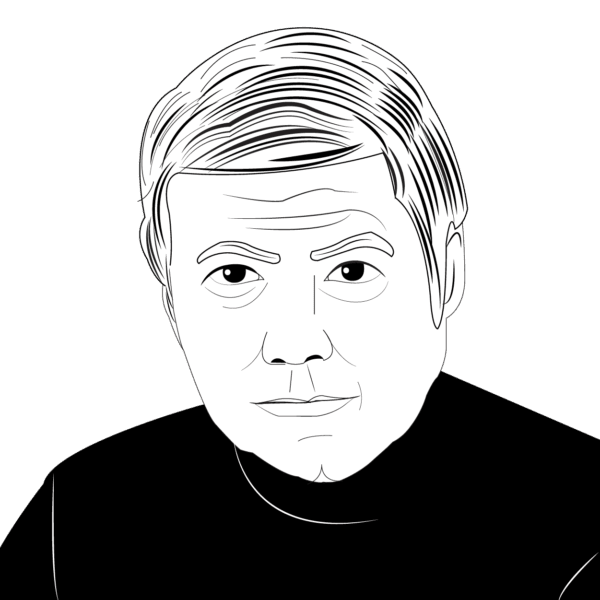
Born in 1894 into a Jewish family of German origin in Prague - then under Austro-Hungarian rule - Schulhoff trained in his native city, then in Vienna, Leipzig and Cologne. He studied piano, conducting and composition in turn. Initially, Schulhoff was greatly influenced by Edvard Grieg, Richard Strauss and Claude Debussy, but the First World War marked a decisive turning point. Sent to the Russian and Italian fronts, he returned damaged and revolted, and his socialist militancy took hold.
From 1918 onwards, Schulhoff was a central figure in the German musical avant-garde, a renowned pianist and teacher. He gravitated towards the artistic circles of young artists in Dresden and Berlin, and frequented the painter Otto Dix, also shaken by the war. The musician maintained correspondence with composers Arnold Schoenberg and Alban Berg, whose music he championed. At this time, too, jazz was gradually invading cabarets, and Schulhoff came into contact with this repertoire through his friend, the painter George Grosz. Grosz also introduced him to the Berlin Dada movement.
Jewish, homosexual, communist and avant-garde, Erwin Schulhoff soon found himself in the Nazi crosshairs. In June 1941, he was deported to Wülzburg prison near Weißenburg, Bavaria. He died of tuberculosis on August 18, 1942.
Gifted with great originality and quality of writing, his work, which passed through a number of distinct stylistic periods, marks a departure from Romanticism, with its taste for atonality, surrealism and early and popular music.
Along his university studies (DEA in musicology, University of Paris IV-Sorbonne), Frédéric Cellier was awarded three first prizes and a development prize at the CNR of Nice and won first prize at the International Competition of Musical Execution - soloist category – of Stresa (Italy).
He is the laureate of the Fondation de France and the Yehudi Menuhin Foundation and accredited teacher at the CNR of Nice, the CNR of Marseille, and at the CRR Olivier Messiaen of Avignon (France).
Frédéric Cellier is the interpreter of Francis Poulenc’s Sonata for clarinet Bb and piano with Jean-Michel Damase, Jean Françaix or Gabriel Tacchino, as well as his own arrangements for clarinet and harp of Erik Satie's Gymnopédies and Gnossiennes with the great French harpist Elizabeth Fontan-Binoche, and for clarinet, piano, and string orchestra of George Gershwin's Rhapsody in blue for Wynton Marsalis or under the baton of Adrian Gershwin, grandson of the composer.
Founder and artistic director of STRADIVARIUS Editions, he is the author of light music pieces played around the world and a considerable number of arrangements of all styles and for all instruments, acclaimed by many personalities in the music world, including Michèle Auric, Jean Françaix, Adrian Gershwin, Wynton Marsalis, Yehudi Menuhin, Madeleine Milhaud, Manuel Rosenthal, Gabriel Tacchino, and Ornella Volta.
"Frédéric Cellier has produced a number of adaptations of Georges Auric's works with such talent and precision that I consider them a natural addition to his chamber music catalogue."
Michèle AURIC - Georges Auric's widow
"To Frédéric Cellier, excellent musician and tireless arranger."
Jean FRANÇAIX - Composer and pianist
"Arranging a musical work is always a delicate and risky exercise, because it requires both modifying it so that it can be played by the desired instruments and preserving its very essence. But that is exactly what Frédéric Cellier has done, preserving the nuances, subtleties and soul of the original works while breathing new life into them.
His arrangements give all the musicians the chance to perform these compositions specially revisited for their instrument, and make music lovers rediscover them in a new light."
Adrian GERSHWIN - George Gershwin’s grandson
"Congratulations for your beautiful new orchestration and rendition of Gershwin’s Rhapsody in blue."
Wynton MARSALIS - Trumpet player, composer, bandleader, general and artistic director of Jazz at Lincoln Center, New York
"It is outstanding that Frédéric Cellier has managed to transpose Saxophone Marmalade from the saxophone to the clarinet. I thank him for it and wish its great and deserved success. "
Manuel ROSENTHAL - Conductor, composer and Maurice Ravel’s pupil
"I am very happy to tell you how much I appreciated your transcription of the Capriccio, based on Francis Poulenc's Le Bal Masqué. It perfectly reflects the spirit and verve of the score for two pianos that I had the opportunity to play and record with Jacques Février, and it was a great pleasure for me to premiere it in Montpellier."
Gabriel TACCHINO - Pianist, Francis Poulenc’s specialist
"I must tell you that I really like your transcriptions and that I think the tone of the instruments you have chosen suits perfectly our beloved composer."
Ornella VOLTA - Musicologist, president of the Erik Satie’s Foundation






Added to your basket
Removed from your basket
Added to your favorites
Removed from your favorites
You must be registered to use this function
You reached the download limit for free products (5 per day)






















 - SCORE Clarinet Bb (chalumeau) and piano)