




- Voice
- Keyboard
- String
- Woodwind
- Brass
N°2 Largo (excerpt)
1711
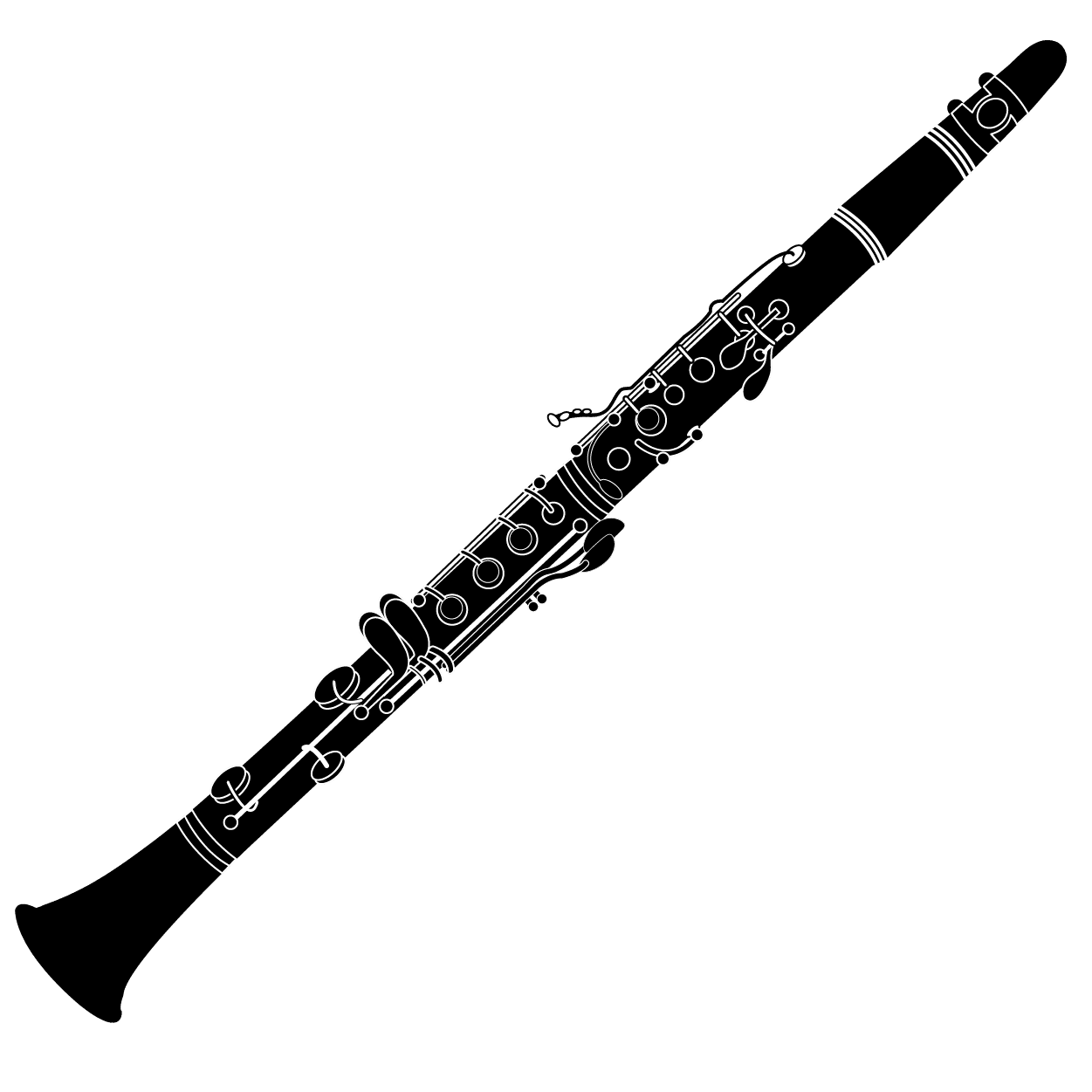
Clarinet Bb (chalumeau) and harp or keyboard
Arranged by Frédéric CELLIER
Duration ≃ 01:50 | Difficulty ≃ 1/10
$ 2.99 Add
Add
SCORE Clarinet Bb (chalumeau) and harp or keyboard
PDF - 2 pages
+
PART Clarinet Bb (chalumeau)
PDF - 1 page
+
BACKING TRACK
MP3 - 1 track
The second movement, Largo, of Antonio Vivaldi's Violin Concerto Op. 3 No. 6 RV 356 (1711) offers a moment of deep introspection at the heart of an otherwise very energetic work. Written in a minor key, this slow movement is distinguished by its meditative and expressive character.
The solo part develops a singing, almost vocal melodic line, supported by a very sparse accompaniment initially entrusted to the strings and continuo, here reduced to the harp. This sobriety highlights the expressive richness of the soloist, who seems to improvise a soft and melancholic lament, creating an atmosphere of suspended calm and intimate poetry.
This Largo perfectly illustrates Vivaldi's artistry in slow movements: direct emotion, without overload, where the simplicity of the writing serves a profound expressive intensity.
In my arrangement, I have retained only the beginning, played exclusively with the low notes of the clarinet, called the chalumeau register, and somewhat simplified in order to breathe more easily.
This gives young clarinetists the opportunity to discover one of the greatest Baroque composers, and one of the very first to have written for the clarinet, while progressing instrumentally.
Frédéric Cellier
Antonio Vivaldi was born in Venice on March 4, 1678. The son of a violinist at St. Mark's Basilica, he grew up surrounded by church services and concerts. Ordained as a priest in 1703, he was quickly nicknamed il Prete Rosso—the red priest—because of his flamboyant hair. Poor health soon forced him to give up celebrating Mass, but not music, which became his true calling and his most fervent language.
Vivaldi found his home at the Ospedale della Pietà, a Venetian institution for orphaned girls, where he taught violin and composed tirelessly. It was there that his genius blossomed: he renewed the concerto, affirming its modern form and creating a dialogue between the orchestra and the soloist with unprecedented dramatic energy. His music is lively, colorful, and full of contrasts. The Four Seasons, published in 1725, paint nature with a new evocative force, combining poetry and virtuosity, and became one of the pinnacles of Baroque music.
Celebrated throughout Europe, Vivaldi composed hundreds of concertos, as well as operas, sonatas, and sacred music. However, fame is unstable. At the end of his life, tastes changed and his music gradually fell into obscurity. He died poor and almost forgotten in Vienna in 1741. It took nearly two centuries for his work to be rediscovered and recognized for its true value as one of the most brilliant of the Baroque period.
Along his university studies (DEA in musicology, University of Paris IV-Sorbonne), Frédéric Cellier was awarded three first prizes and a development prize at the CNR of Nice and won first prize at the International Competition of Musical Execution - soloist category – of Stresa (Italy).
He is the laureate of the Fondation de France and the Yehudi Menuhin Foundation and accredited teacher at the CNR of Nice, the CNR of Marseille, and at the CRR Olivier Messiaen of Avignon (France).
Frédéric Cellier is the interpreter of Francis Poulenc’s Sonata for clarinet Bb and piano with Jean-Michel Damase, Jean Françaix or Gabriel Tacchino, as well as his own arrangements for clarinet and harp of Erik Satie's Gymnopédies and Gnossiennes with the great French harpist Elizabeth Fontan-Binoche, and for clarinet, piano, and string orchestra of George Gershwin's Rhapsody in blue for Wynton Marsalis or under the baton of Adrian Gershwin, grandson of the composer.
Founder and artistic director of STRADIVARIUS Editions, he is the author of light music pieces played around the world and a considerable number of arrangements of all styles and for all instruments, acclaimed by many personalities in the music world, including Michèle Auric, Jean Françaix, Adrian Gershwin, Wynton Marsalis, Yehudi Menuhin, Madeleine Milhaud, Manuel Rosenthal, Gabriel Tacchino, and Ornella Volta.
"Frédéric Cellier has produced a number of adaptations of Georges Auric's works with such talent and precision that I consider them a natural addition to his chamber music catalogue."
Michèle AURIC - Georges Auric's widow
"To Frédéric Cellier, excellent musician and tireless arranger."
Jean FRANÇAIX - Composer and pianist
"Arranging a musical work is always a delicate and risky exercise, because it requires both modifying it so that it can be played by the desired instruments and preserving its very essence. But that is exactly what Frédéric Cellier has done, preserving the nuances, subtleties and soul of the original works while breathing new life into them.
His arrangements give all the musicians the chance to perform these compositions specially revisited for their instrument, and make music lovers rediscover them in a new light."
Adrian GERSHWIN - George Gershwin’s grandson
"Congratulations for your beautiful new orchestration and rendition of Gershwin’s Rhapsody in blue."
Wynton MARSALIS - Trumpet player, composer, bandleader, general and artistic director of Jazz at Lincoln Center, New York
"It is outstanding that Frédéric Cellier has managed to transpose Saxophone Marmalade from the saxophone to the clarinet. I thank him for it and wish its great and deserved success. "
Manuel ROSENTHAL - Conductor, composer and Maurice Ravel’s pupil
"I am very happy to tell you how much I appreciated your transcription of the Capriccio, based on Francis Poulenc's Le Bal Masqué. It perfectly reflects the spirit and verve of the score for two pianos that I had the opportunity to play and record with Jacques Février, and it was a great pleasure for me to premiere it in Montpellier."
Gabriel TACCHINO - Pianist, Francis Poulenc’s specialist
"I must tell you that I really like your transcriptions and that I think the tone of the instruments you have chosen suits perfectly our beloved composer."
Ornella VOLTA - Musicologist, president of the Erik Satie’s Foundation






Added to your basket
Removed from your basket
Added to your favorites
Removed from your favorites
You must be registered to use this function
You reached the download limit for free products (5 per day)






 - SCORE Clarinet Bb (chalumeau) and harp or keyboard)